


Reflective Journaling vs. Morning Pages: Which Fits Your Self-Reflection Style?
Morning pages and reflective journaling look alike on the page but do different work. Compare time, tone, privacy and best use cases to pick the one you'll actually keep.
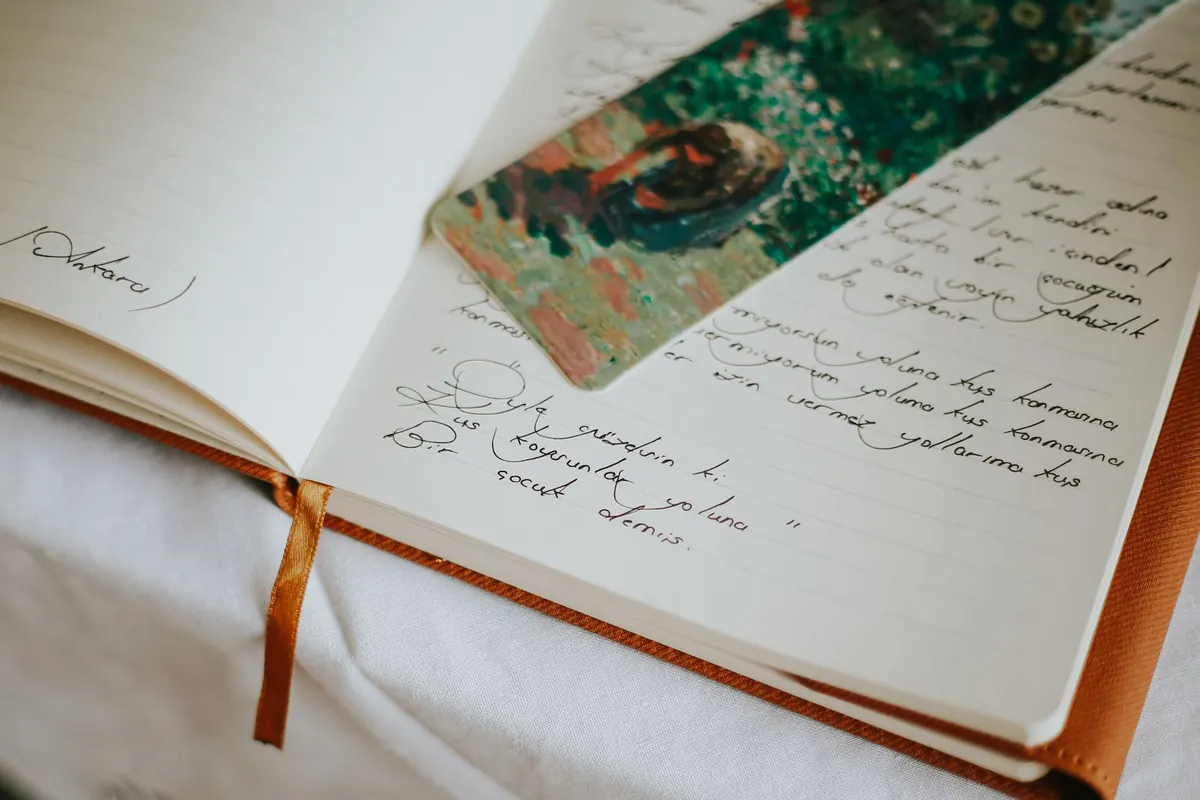
There's a moment in most journaling lives when "I should write things down" turns into a search for a method. Two shapes come up more than any other: morning pages, the three-pages-by-hand ritual that opens Julia Cameron's The Artist's Way, and reflective journaling, the slower practice of arriving at the page with a question and staying until something answers. From the outside they look nearly identical — a notebook, a pen, a quiet twenty minutes. Inside, they do different work. One is a drain. The other is a mirror.
What Each Practice Actually Asks of You
Morning pages are deliberately unglamorous. Three pages, longhand, before the day gets its hands on you. No topic, no editing, no going back to fix the sentence you just wrote. What lands on the page is whatever sits at the top of the pile: the dream about a supermarket you've never visited, the email you're avoiding, the dentist appointment still unmade.
The rule that matters most is the ban on stopping. You don't pause to reconsider, and you don't skip a page because nothing interesting is coming. Boredom, repetition and small complaints are all permitted. Writing the same complaint three mornings running is often how you find out it wasn't small at all.
Reflective journaling: same page, different posture
Reflective journaling starts somewhere. Sometimes a prompt — What actually happened in that meeting? — sometimes a word you keep circling, sometimes a plain account of the day. The writing is slower and more selective than morning pages, and you read it back. Not necessarily every day: plenty of people keep a ten-minute daily habit, while others sit down once a week for half an hour and go deeper.
The aim isn't to empty out. It's to notice the thought you keep repeating, the gap between what you said and what you meant, the feeling that arrived in your chest before you had a name for it.
Time: Daily Volume vs. Elastic Minutes
Three handwritten pages usually take between twenty and forty minutes, depending on how fast you write and how much is waiting to come out. The real cost isn't one session, it's seven. At twenty-five minutes a morning you're committing well over two hours a week, at the hour of day when your attention is least defended. That's not a reason to avoid the practice. It is a reason to be honest about whether your mornings can hold it.
Reflective journaling stretches to fit. Five minutes before bed with one question still counts. So does fifteen minutes on a Sunday with a cup of something hot and three things you want to understand better. The method forgives a busy Tuesday because the rhythm isn't daily by definition.
There's a subtler difference in what inconsistency does to each. Morning pages are a momentum practice: miss four days and the fifth feels like restarting a cold engine. Reflective journaling is a conversation you can pick up mid-sentence, which is why it tends to survive chaotic months.
Tone: Draining vs. Digging
Morning pages sound like unloading. Repetitive, funny, occasionally profane, sometimes so dull you'd be embarrassed to read it. That's the design. The censor needs somewhere to go, and giving it three pages of unsupervised time tends to loosen its grip on the rest of your day.
I don't want to go to that dinner and I have no idea why. Also the kitchen tap is still dripping. Also I am thirty-nine and still writing about taps.
Reflective journaling sounds more like a patient conversation with someone who isn't in a hurry.
What would I need to say to make that dinner bearable? What am I afraid would happen if I said it?
Neither tone is superior. The mistake is expecting one to do the other's job — trying to be insightful at 6:40 a.m. with a pen in your hand and a bus to catch, or expecting a weekly reflection session to absorb a week of accumulated noise.
Privacy, and Who the Writing Is For
Both practices need privacy. Morning pages need it absolutely. The moment you picture a reader — a partner, a future biographer, your more sensible self in five years — the writing starts performing, and performed writing can't drain anything. If you share a home, find a drawer, a bag, a locked note, whatever lets you be sloppy without an audience. Some people shred the pages monthly; others keep them sealed and unread. Both work, as long as nobody is watching over your shoulder.
Reflective journaling is more likely to be revisited, which raises the stakes and the temptation. You start writing sentences that make you sound reasonable. Watch for the line you wrote because it flatters you — that's information, not a failure. Note it and keep going.
One honest caveat: journaling is a thinking tool, not a treatment. If a page keeps circling something heavy, frightening or stuck, talking it through with a doctor or a qualified therapist is a sensible next step rather than a failure of the method.
Where Each Method Earns Its Keep
Use the list as a rough sorting test rather than a rulebook.
- You feel flat, blocked or creatively stuck. Morning pages, consistently, for at least three weeks. Volume matters more than insight here.
- You're circling one decision. Reflective journaling, with the same question written at the top of each entry until you're bored of your own answers.
- You're in the middle of a transition — a move, a new job, a role you're growing out of. Reflective journaling, because you'll want to reread it in six months and see the arc.
- Your thoughts loop at night. Morning pages work well as the first step, moving the loop onto paper so the day can start. Add a short reflective entry once a week to look for the pattern behind the loop.
- You have eight minutes and no routine. Reflective journaling. It's the only one of the two that survives a broken week.
- You want to write more easily in other parts of your life. Morning pages, specifically the rule that you don't stop to edit.
A Two-Week Test You Can Run
Arguments about journaling methods are cheap. Two weeks of evidence about yourself is worth more.
- Pick a fortnight with no travel and no major deadlines. Tell yourself the experiment is fixed and short, which makes it easier to start badly.
- Days one to five: morning pages. Three pages by hand, first thing, kept out of sight afterwards. Don't evaluate them until the week is done.
- Days six to ten: set the pages aside. Instead, spend twelve minutes in the evening with one question about the day. Write the question first, then answer it for the full twelve minutes.
- Days eleven to fourteen: whichever practice you reached for without negotiating with yourself, do that one.
- At the end: half a page on a single question. Which one felt like homework, and which felt like relief?
The answer is usually clear by day ten. Then build the smallest version that fits your real week: morning pages three mornings out of seven, or one reflective session each Sunday with a line or two on busy days. A practice you'll return to on a bad Tuesday beats a perfect one you abandon in March. Keep the notebook where you can see it, keep the first five minutes easy, and let the method serve the thinking rather than the other way round.
Photo: betül nur akyürek / Pexels